
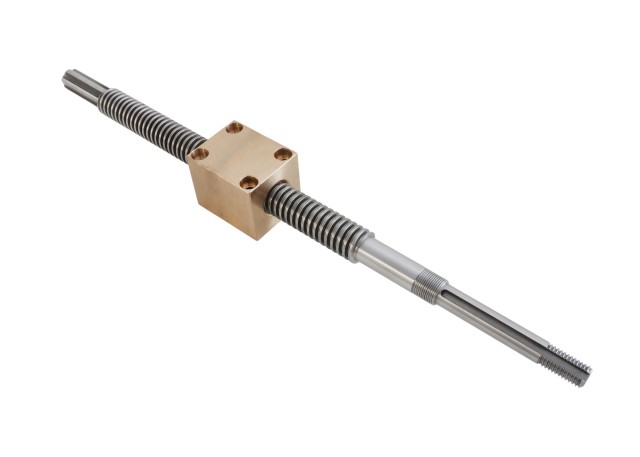
Choosing the right thread manufacturing process is essential for ensuring strength, durability, and cost efficiency in modern engineering and production. Rolled threads, compared to machined threads, consistently offer superior performance thanks to the way they are formed. While machined threads are created by cutting material away from a workpiece using tools such as lathes or dies, this cutting action disrupts the metal’s internal grain structure. The result is the creation of small tears and stress points at the root of the thread, which can reduce overall strength and make the thread more vulnerable to fatigue under repeated or heavy loads.
Rolled threads are formed through a cold-forming process in which hardened dies press into the material and displace it to create the desired shape. Because this method compresses rather than removes material, it realigns and densifies the metal’s grain structure. This uninterrupted flow of material gives rolled threads significantly higher tensile and shear strength. The cold-working effect of the rolling process increases surface hardness as well, which enhances durability and improves resistance to wear in demanding environments.
Another advantage of rolled threads is the smooth, burnished surface finish produced during fabrication. This reduces friction during assembly and operation, helping to prevent galling and minimizing stress concentrations that can contribute to fatigue failures. Rolled threads also provide cost and material savings, since the process produces no waste—unlike machining, which generates metal chips. The efficiency and speed of thread rolling make it an economically attractive option, particularly when working with expensive materials or high-volume production.
Although rolled threads offer numerous advantages, there are situations where machined threads are still necessary. These include applications involving very hard materials that cannot be cold-formed or large, custom thread profiles for which rolling dies are not readily available. For most standard lead screw applications, however, rolled threads remain the superior choice. Their strength, durability, and reliability make them indispensable in industries such as aerospace, automotive, and construction where performance is critical.
ABSSAC holds a wide range of rolled lead screws in stock, from 6mm to 50mm diameter and in various materials. We also hold a wide range of nuts to suit along with compatible bearings and drive couplings.
ABSSAC also offers an in-house screw end machining service enabling your lead screw applications to be supplied ready to fit.
For further information or to discuss your application requirements, please contact:
georgetaylor@abssac.co.uk
01386 421005
We use a time limited cookie which is used to refer to information you enter into our website rather than storing that as less-secure cookie data.
This expires after being inactive for a short time so the information is only stored briefly.
This is useful for facilities such as remembering form information so you do not have to re-enter everything if you make a mistake.
This type of data is usually removed as soon as form submission is successful.
This type of cookie is essential for shopping on our website and using a shopping cart and customer login.
A cookie used to store an encoded reference so the website can remember your visit. Used with customer and guest accounts alongside Mailchimp services.
This is a web analytics service provided by Google which sets cookies allowing us to see statistics of what visitors do on our website. Google's Consent Mode adjusts the cookie behaviour based on your consent choices.
Learn More About Google's Privacy | Opt-out of Google Analytics cookies

This website uses reCAPTCHA for spam protection on our forms. Website visitors use of reCAPTCHA is subject to the Google Privacy Policy and Terms of Use.
There are no cookies used in providing the sharing buttons on this website. If you click through to these services they may use cookies or advertisements.
EDAA opt-out program
